As a website owner, you will encounter many technical terms. This guide will help you understand the most important ones.
Understanding these terms will help you communicate more effectively with your web developer and make more informed decisions about your website.
Network and Domains
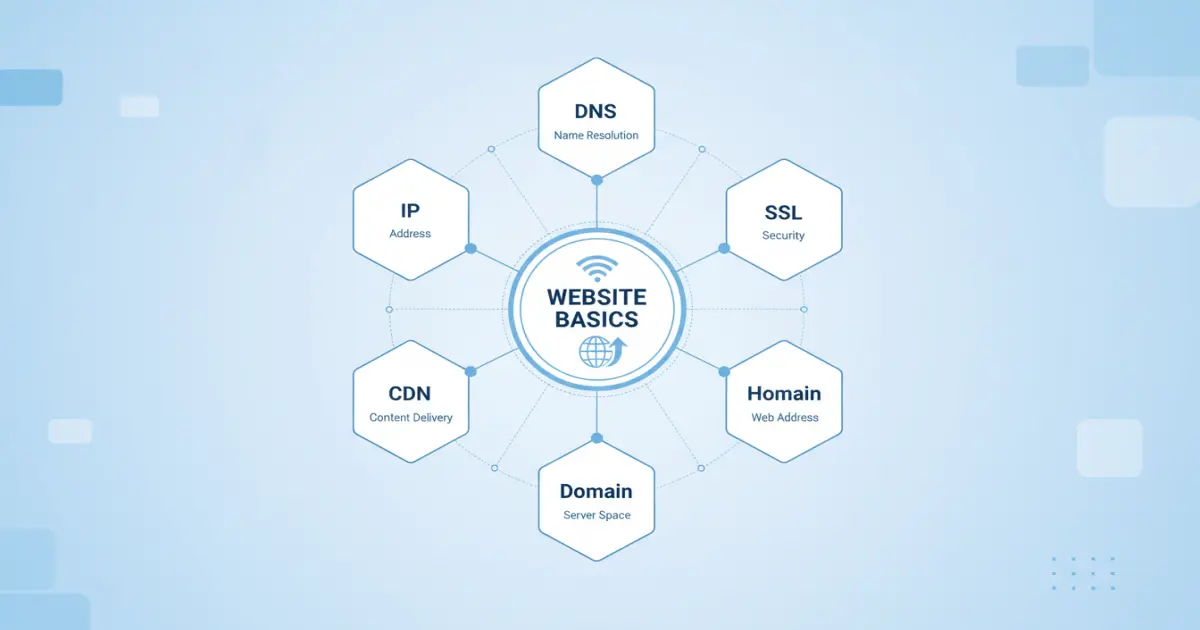
IP Address
The IP address is the unique address of every computer, network, or device in the world. It serves for identification and consists of four groups of digits separated by dots (for example: 192.168.1.1).
Domain
The domain is the visual name that visitors enter in the browser. It consists of a top-level domain (TLD like .com, .bg) and a second-level domain (the name of your site).
Subdomain
The subdomain is a third-level domain (like www or shop.domain.com), which offers flexibility for creating multiple separate websites under one main domain.
DNS Infrastructure
DNS (Domain Name System) records are critical for the functioning of your website. Here are the four main types:
- A Records: Direct the domain to specific IP addresses
- CNAME Records: Create aliases directing to other DNS records
- MX Records: Manage the routing of emails for the domain
- TXT Records: Store validation data and other information
Email Protocols
Three protocols secure email functionality:
SMTP (Simple Mail Transfer Protocol)
Controls the sending of outgoing messages.
IMAP (Internet Message Access Protocol)
Retrieves emails, keeping them stored on the server.
POP3 (Post Office Protocol 3)
Downloads emails to local devices.
Server and Performance
- CDN (Content Delivery Network): Distributes content from geographically closest servers for faster loading on a global scale
- Hosting services: Vary from shared hosting to VPS to dedicated servers, each offering different levels of resources
- SSL certificates: Encrypt connections between users and servers, recognizable via HTTPS and padlock icons
- PHP: Allows dynamic website functionality and database connection
- CSS: Controls visual presentation - fonts, colors, spacing, and effects
Website loading speed increasingly influences search engine rankings, making performance optimization critical for visibility.
— Creative Idea
SEO optimization
SEO (Search Engine Optimization) involves many factors for improving visibility in search engines and rankings. Website loading speed is one of the key factors that influence your positions in Google.
Conclusion
Understanding these terms will help you make more informed decisions about your website and communicate more effectively with your technical team. If you have questions regarding any of these terms, the Creative Idea team is always ready to help!